How Mozzarella Became the Star of Cheese Pizza
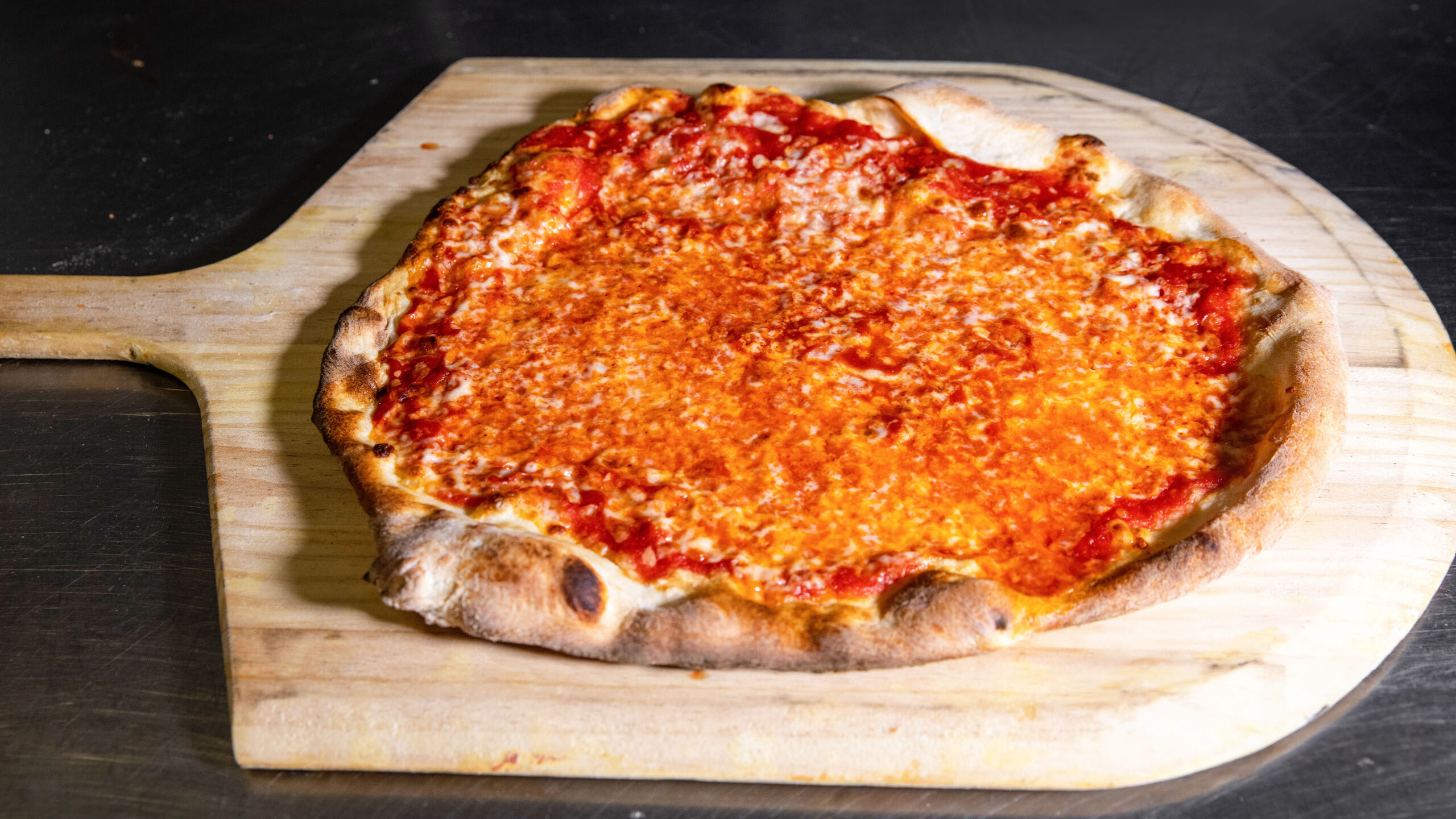
Walk into almost any pizzeria, from a corner slice shop in Brooklyn to a wood-fired restaurant in Naples-inspired style, and the default cheese on a pizza is mozzarella. People rarely stop to ask why. It Cheese Pizza can feel inevitable, as if pizza and mozzarella were born together and could never have gone another way.
That sense of inevitability is misleading. Plenty of cheeses melt. Plenty of cheeses taste good on bread. Plenty of cheeses brown beautifully in a hot oven. Yet mozzarella rose above the field and became the defining cheese of cheese pizza because it solves a remarkably difficult set of culinary problems all at once. It melts without instantly breaking. It stretches without becoming rubber. It carries milk flavor without burying the tomato. It can be made moist and delicate or drier and sturdier depending on the style of pie. Most important, it behaves well under the punishing conditions of pizza baking.
That last point matters more than most diners realize. Pizza is not simply bread with toppings. It is a balancing act conducted at high heat, often very high heat, with a narrow margin for error. Over years of watching pizzaiolos work and speaking with bakers, cheesemongers, and restaurant operators, one theme keeps surfacing: the right cheese has to cooperate with the dough, the sauce, and the oven. Mozzarella does.
Before mozzarella ruled the pie
The earliest pizzas in Naples were not standardized in the modern sense, and cheese use was not always as straightforward as current menus suggest. Historical food traditions are rarely neat. Southern Italian flatbreads and early pizzas drew from what was available, affordable, and practical. Fresh dairy existed, certainly, but so did hard grating cheeses, rendered fats, cured pork, anchovies, garlic, and herbs. Pizza was once much more fluid as a category than the modern takeout menu implies.
Mozzarella itself grew out of a specific dairy tradition. It belongs to the family of pasta filata cheeses, meaning stretched-curd cheeses. Curds are acidified, heated, and kneaded until they become elastic, then shaped. In Campania and nearby regions, mozzarella di bufala made from water buffalo milk became one of the great local products. Cow’s milk versions, often called fior di latte in Italy, also became important. These were not merely tasty cheeses. They were expressions of regional agriculture, climate, and animal husbandry.
So why did one regional cheese become the global face of cheese pizza? The answer lies partly in Naples, where pizza as we know it took shape, and partly in migration and industrialization. Once Neapolitan pizza gained stature and then traveled with immigrants, the cheese most associated with those pies traveled in reputation too. But reputation alone would not have sustained it. Plenty of revered ingredients remain local because they are too fragile, too expensive, or too difficult to reproduce elsewhere. Mozzarella, especially cow’s milk mozzarella and low-moisture versions developed later, proved adaptable.
That adaptability changed everything.
The chemistry of a great pizza cheese
People often describe mozzarella in emotional terms. They talk about the pull of a hot slice, the creamy puddles, the browned blisters, the comforting mildness. All of that is true, but the deeper reason mozzarella dominates cheese pizza is scientific. Its structure gives cooks room to work.
Cheese performance on pizza depends on moisture, fat, protein, salt, and acidity. Change any one of those variables and the pie behaves differently. A cheese that tastes wonderful at room temperature can turn greasy, grainy, or leathery under heat. A cheese with too much free oil may flood the surface. One with too little elasticity may split. One with excessive moisture may soak the crust or steam instead of brown.
Mozzarella lands in an unusually useful middle ground. The pasta filata process aligns proteins in a way that supports stretch. Its flavor is milky and gentle, which means it complements sauce instead of competing with it. Depending on how it is made, it can retain enough water to feel lush or shed enough water to withstand a longer bake. It softens evenly, and if handled well, it reheats better than many alternatives.
A pizza maker looking for reliability usually wants at least four things from a cheese:
- Predictable melting across the pie
- Controlled moisture release
- A clean dairy flavor that supports tomato and crust
- Some browning, but not so much that it turns bitter or oily
Mozzarella checks those boxes better than almost any other cheese used as the primary topping.
The magic of mildness
Strong cheeses can be thrilling. Sharp provolone brings a bite. Pecorino adds salinity and funk. Aged gouda contributes caramel notes. Blue cheese can electrify a white pie. But cheese pizza is not a contest in intensity. The best versions depend on balance.
Mozzarella succeeds because it does not shout. That may sound backhanded, but in kitchen terms it is high praise. Great cheese pizza is really a conversation between crust, sauce, cheese, heat, and time. If the cheese overwhelms the sauce, the pie becomes heavy and one-dimensional. If the sauce dominates, the cheese becomes decorative. Mozzarella leaves room for the wheat in the crust, the sweetness and acidity of tomato, the char from the oven floor, and the aromatic lift of basil or oregano.
This restraint is one reason children love it and serious pizza obsessives never tire of it. It meets people where they are. For a casual diner, it tastes familiar and comforting. For a trained palate, it reveals nuance in the dough and the bake. It is hard to think of another cheese that can satisfy both ends of that spectrum so consistently.
I have seen this play out in tasting sessions where several pies are made with the same dough and sauce but different cheeses. Tasters often praise bolder cheeses on the first bite. By the second or third slice, the judgments start changing. The sharper cheeses become tiring. The greasier ones feel clumsy. Mozzarella keeps inviting another bite. That staying power is a major reason it became the centerpiece rather than just one option among many.
Fresh mozzarella and low-moisture mozzarella are not the same job
One reason conversations about cheese pizza become muddled is that people say “mozzarella” as if it were a single thing. On pizza, it is at least two major things, each suited to different outcomes.
Fresh mozzarella is soft, wet, and delicate. Good fresh mozzarella has a clean lactic aroma and a tender structure that feels almost juicy when warm. On a hot Neapolitan-style pizza, it can create luxurious white pools and a creamy bite. But it can also dump water if the maker uses too much or fails to drain it properly. In a blazing oven with a fast bake, that trade-off is manageable and often desirable. In a slower deck oven or a home oven, it can become tricky.
Low-moisture mozzarella was the answer to scale, consistency, and the changing conditions of pizza baking outside southern Italy. It contains less water, shreds well, stores longer, and browns more predictably. It is the backbone of American cheese pizza, especially in New York slices, delivery pies, and many pan pizzas. Because it sheds less moisture, it protects the crust and creates the familiar stretch most diners expect. It is also easier to portion, which matters enormously in a restaurant where food cost is tracked by the ounce.
This was not a mere compromise made for convenience. It was a practical evolution that made cheese pizza repeatable. Once pizzerias needed to serve large volumes, source product consistently, and train staff across shifts, low-moisture mozzarella became a workhorse ingredient. The romance belongs to fresh mozzarella, but the empire was built largely on the lower-moisture version.
Immigration, scale, and the American pizza boom
Mozzarella became the star of pizza globally because it thrived in America, where pizza expanded from an immigrant food into a national habit. That expansion required ingredients that could be distributed widely and handled consistently. Dough recipes changed. Ovens changed. Flour changed. Cheese had to change too.
As Italian immigrants established pizzerias in the United States, they adapted to local milk supplies, local tastes, and local economics. Water buffalo milk was not the foundation of the American dairy landscape. Cow’s milk was abundant. Cheesemakers refined mozzarella styles that fit commercial realities. Low-moisture mozzarella, especially part-skim versions, brought a mix of melt, browning, sliceability, and shelf life that restaurants could count on.
That reliability mattered at every level. A neighborhood pizzeria might go through large volumes in a week. Cheese had to arrive in usable condition, survive refrigeration, shred cleanly, and perform from the first pie of the day to the last order at night. Harder cheeses could be too oily or salty as the main layer. Softer cheeses might flood the pie. Cheddar could separate. Provolone could overpower. Mozzarella kept working.
The rise of the classic American cheese pizza was not an accident of taste alone. It was also a triumph of supply chains, dairy technology, and kitchen practicality. When one cheese can satisfy customer expectations, restaurant margins, and operational efficiency, it gains a powerful advantage over rivals.
What mozzarella does in the oven that others struggle to do
A pizza oven is a stress test. In a very hot wood-fired oven, a pie may bake in 60 to 90 seconds. In a deck oven, perhaps several minutes. In a conveyor oven, the conditions are different again. Each environment asks the cheese to melt in sync with the dough and sauce.
Mozzarella is unusually flexible across these systems. Fresh mozzarella excels when high heat and short bake time preserve its tenderness. Low-moisture mozzarella shines when a longer bake needs a cheese that will melt thoroughly and brown without collapsing into grease. Part-skim versions can even help maintain structure in styles where the slice needs to hold up in the hand.
The practical advantages are easy to spot if you compare mozzarella with common alternatives. Cheddar browns quickly and can release oil. Monterey Jack melts nicely but can taste flat and lacks the classic pull. Provolone contributes depth, and many pizzerias blend it in, but as the sole cheese it can push too far into sharpness and salinity. Fontina can be elegant but is often richer and more expensive. Muenster can work, though it lacks mozzarella’s iconic identity and can feel softer in flavor.
There is also the matter of visual appeal. Pizza is sold by sight before it is judged by taste. Mozzarella forms the creamy blanket that many people associate with comfort and abundance. When it blisters just enough, it signals heat and freshness. When it stretches from pie to plate, it communicates indulgence in a way few cheeses can match. A lot of pizza culture, from advertising to social media, has leaned hard on that visual language. Mozzarella is not only functional, it is photogenic.
The role of moisture, and why so many home pizzas fail
Home cooks often discover mozzarella’s virtues by first experiencing its pitfalls. They buy a beautiful ball of fresh mozzarella, tear it over a pizza, and end up with a watery center and pale cheese. Then they wonder why the pizzeria version looks so controlled.
The answer is usually not the cheese itself. It is the context. Professional ovens run far hotter than most home ovens. Pizza makers drain fresh mozzarella, slice it strategically, or let it sit on towels before use. They know how much sauce the dough can handle. They know when to use fresh and when to switch to low-moisture. They also know that “more cheese” is not always better.
One of the most common mistakes in cheese pizza is overloading. A heavy blanket of cheese delays evaporation and traps moisture. The crust steams. The center droops. The sauce and cheese merge into a wet layer. Mozzarella is forgiving, but it still obeys physics. The best pies often use less cheese than people expect, applied more thoughtfully.
Here are a few practical principles that separate a lively cheese pizza from a soggy one:
- Drain fresh mozzarella before topping the pie
- Match the cheese style to the oven and bake time
- Distribute cheese evenly rather than piling it at the center
- Use restraint, enough to cover, not enough to smother
- Blend cheeses only when each one has a clear purpose
That last point is worth underlining. Many excellent pizzerias do not rely on mozzarella alone. They build with it. A dusting of pecorino can sharpen the finish. A little provolone can deepen the profile. Parmigiano-Reggiano can add nuttiness and umami. But mozzarella remains the foundation because it handles the structural work.
Regional styles built around mozzarella, even when they bend the rules
If you travel through pizza regions, mozzarella keeps appearing, though it changes character from one style to the next. On Neapolitan pies, it may appear in torn pieces or rounds, often with visible white patches against bright tomato. On New York pizza, it becomes the cohesive melted layer that supports foldable slices. On Detroit-style pizza, Wisconsin brick cheese is famous, yet mozzarella frequently enters the conversation through blends or in other shops that adapt the style. On many Sicilian and pan pizzas, mozzarella helps create a soft, rich crumb-to-topping transition.
This reveals something important. Mozzarella is not dominant because one rigid tradition imposed itself on every pizza. It became dominant because it proved versatile enough to serve many traditions. It can be delicate or robust, restrained or abundant, solo or blended. It can sit above the sauce, below it, or in a layered system. It can finish pale and creamy or amber and blistered.
Cheese pizza especially depends on that versatility. Once you remove pepperoni, sausage, mushrooms, or peppers, the cheese has nowhere to hide. Every weakness is exposed. A one-note cheese becomes dull. An unstable cheese becomes messy. A harsh cheese becomes exhausting. Mozzarella keeps the pizza coherent.
The economics of star ingredients
There is also a blunt business reason mozzarella rose to the top: it is cost-effective relative to its performance. Restaurant ingredients are judged not only by beauty or heritage but by yield, consistency, and waste. Mozzarella performs well on all three counts, especially in its low-moisture forms.
A pizzeria can portion it accurately. Staff can be trained to use it quickly. It stores well enough to fit the realities of volume service. It satisfies customers who expect a familiar cheese pull. Even premium versions can justify their cost because diners recognize the value on the plate. Some specialty cheeses taste wonderful, but their higher price and narrower appeal make them better as accents than as the base layer.
This commercial side of the story may seem less romantic than Campanian dairy traditions or blistered Neapolitan crusts, but it is essential. Food history is full of cases where the ingredient that wins is the one that best balances pleasure and practicality. Mozzarella did not become the star of cheese pizza merely because it was delicious. It became the star because it was delicious in a repeatable, profitable, scalable way.
Why not another cheese?
It is worth asking the counterfactual. If mozzarella had never entered the pizza story, what cheese might have taken its place?
Provolone comes up often, and for good reason. It melts well and brings more complexity. Many old-school pizzerias use it in blends. But as a standalone cheese on a plain pie, it can read too assertive, especially when eaten in quantity. Cheddar is deeply loved in other contexts, yet on a standard tomato pie it often feels heavy and can throw more oil than desired. Young fontina is graceful but usually too rich and too expensive for widespread default use. Scamorza, a cousin in the stretched-curd family, might have made a run, especially smoked versions, but its flavor profile is narrower and less universally appealing.
In other words, the nearest competitors either lack mozzarella’s neutrality, its elasticity, its moisture balance, or its broad accessibility. Mozzarella occupies the sweet spot. It tastes like what many people imagine pizza should taste like because generations of pizza makers discovered that it simply works best most of the time.
Cheese pizza made mozzarella famous, and mozzarella made cheese pizza iconic
There is an elegant reciprocity in this story. Pizza elevated mozzarella, but mozzarella also gave pizza one of its most enduring identities. The modern image of cheese pizza, bubbling surface, browned spots, stretchy slice, rests heavily on mozzarella’s behavior. If another cheese had dominated early pizzeria culture, the entire sensory vocabulary of pizza might be different today. We might prize snap instead of stretch, sharpness instead of creaminess, oiliness instead of tenderness. Instead, mozzarella taught people to expect balance.
That expectation now shapes everything from frozen pizza design to fine-dining interpretations. Even chefs who break the rules usually do so against mozzarella’s benchmark. A white pie with taleggio, a seasonal pizza with robiola, or a hybrid pie with aged alpine cheese all make sense partly because diners understand how they differ from the mozzarella standard.
For anyone who makes pizza regularly, that standard becomes deeply practical. When a pie comes out wrong, too wet, too tough, too greasy, too salty, the fix often circles back to the role mozzarella is supposed to play. It should support rather than dominate. It should melt into the pie rather than sit apart from it. It should give enough richness to satisfy but enough restraint to keep the slice lively. Achieving that balance is harder than it looks.
That is the real reason mozzarella became the star of cheese pizza. It is not just tradition, though tradition matters. It is not just flavor, though flavor matters too. It is performance. Mozzarella is the cheese that most gracefully handles the demands pizza places on it, while still tasting comforting, generous, and unmistakably right. Once pizza makers discovered that, the rest of the history almost wrote itself.
Brooklyn Pizza
1647 Arapahoe Ave
Boulder, CO 80302
+1 720-328-2324
FAQ About Cheese Pizza
What type of cheese is used on a cheese pizza in Boulder, CO?
The cheese varies by pizzeria. Brooklyn Pizza uses whole-milk mozzarella made in-house on its standard pies and offers a plant-based cheese option for vegan pizza. Ask the shop directly about ingredients if you have a dietary restriction.
How many slices are in a large pizza in Boulder, CO?
Slice count depends on how the shop cuts the pie. Brooklyn Pizza lists a 16-inch large pizza. If you are ordering for a group, call to confirm the number of slices or ask whether a smaller cut is available.
What is New York style pizza in Boulder, CO?
New York-style pizza usually has a thin crust and wide slices that can be folded. A classic cheese slice pairs tomato sauce with mozzarella. Brooklyn Pizza serves New York-style pizza by the slice and as whole pies.
Corrections
Spot something wrong? Send it to the desk and it gets fixed in the open.